



XCORE® FOR PHYSICAL AI
Intelligent action, on time, every time.
Physical AI brings intelligence into machines that sense, interpret and respond to the real world.
But intelligence alone is not enough. Physical systems must process signals, control interfaces and act within precise, predictable time constraints. XCORE provides the deterministic compute platform needed to turn AI decisions into dependable real-world action.

Physical AI changes what computing must deliver
Traditional AI is largely concerned with understanding information and generating an answer. Physical AI must go further: it must interact continuously with people, machines and the surrounding environment.
That means combining two different types of compute.
01
Intelligence and reasoning
AI models interpret inputs, recognise patterns, make decisions and determine what should happen next.
02
Real-time execution
The system must capture sensor data, process signals, control interfaces and carry out each decision at exactly the right time.
These workloads are complementary. AI provides intelligence; deterministic compute ensures that intelligence can be applied reliably in the physical world.
The execution layer
Why XCORE for Physical AI?
XCORE is a flexible, deterministic processor architecture designed for systems where concurrency, responsiveness and precise timing matter.
Deterministic by design
XCORE enables developers to create operations with predictable execution times without timing being disrupted by caches, interrupts or operating-system scheduling.
For products interacting with the physical world, this makes it possible to deliver consistent behaviour with tightly controlled latency and minimal jitter.
Parallel processing
Independent processing resources allow sensing, signal processing, AI inference, communications and control workloads to be run concurrently and completely synchronised.
Time-critical functions do not have to wait for unrelated tasks to finish.
Intelligence at the edge
XCORE can process audio, vision and other sensor data locally, enabling responsive products that do not depend on a continuous cloud connection.
Local processing can also reduce data movement, support user privacy and improve resilience.
Software-defined flexibility
Developers can configure interfaces and system behaviour in software, adapting the device to different products and application requirements without redesigning the underlying silicon.
This creates a flexible foundation for product differentiation and continued innovation.
From perception to action
XCORE can bring together the functions that sit between an AI decision and the physical world.
The result is a tightly integrated execution platform for intelligent products that need to sense, decide and act.
 Capture data from microphones, cameras and other sensors
Perform real-time signal processing
Run embedded AI inference
 Manage multiple communications and control interfaces
Coordinate outputs with precise timing
Respond predictably to changing real-world conditions
Built for the next generation of intelligent products
Robotics
Coordinate sensing, voice interaction, motor control and communications with predictable real-time behaviour.
Human-machine interfaces
Create natural, responsive interactions through voice, audio, vision, touch and other sensor inputs.
Smart vision systems
Capture and process camera data locally for detection, recognition and responsive control.
Industrial intelligence
Combine monitoring, communications and real-time control in dependable edge systems.
Intelligent consumer products
Add responsive, locally processed intelligence to appliances, entertainment systems and connected devices.

The opportunity
A platform opportunity for Physical AI
As AI moves from the cloud into products, the value of a system will increasingly depend on more than the capability of its AI model.
Products must also meet strict requirements for responsiveness, power, cost, privacy and reliability. This creates demand for a new execution layer: one that connects AI intelligence with deterministic real-world behaviour.
XCORE brings together parallel processing, programmable interfaces, signal processing, embedded AI and real-time control in a flexible software-defined architecture.
It is a proven foundation for today’s intelligent products and for the next phase of Physical AI.
Physical in Action
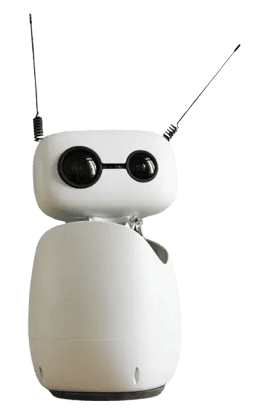
Reachy Mini
Reachy Mini demonstrates how intelligent machines can interact more naturally with people.
The robot uses voice-interface technology powered by the XMOS XVF3800, enabling high-quality far-field voice capture as part of a responsive, engaging human-machine interface.

Explore our thinking on Physical AI
Article
Why Physical AI needs two kinds of compute
Why advanced reasoning must be combined with a fast, deterministic execution layer that can respond reliably to the physical world.
Article
Physical AI: first timing, then AI
Discover why predictable timing is a fundamental requirement for AI systems that sense, decide and act in the real world.
Article
The GenSoC execution substrate
Explore why the next phase of Physical AI will be defined not only by model capability and token generation, but by the dependable execution of intelligent decisions.
Article
What is Physical AI—and what does it mean for silicon design?
An introduction to Physical AI and the architectural changes required as intelligence moves into machines and devices.
Story
Reachy Mini: Physical AI with an XMOS voice interface
See how the XVF3800 enables far-field voice interaction in Reachy Mini, the compact open-source robot demonstrated at CES 2026.
Build intelligence that responds to the real world
Discover how XCORE can provide the deterministic execution, parallel processing and software-defined flexibility your next intelligent product needs.